


About the Saint Francois Mountain Region
The Saint Francois Mountains, one of the oldest mountain ranges in North America, is quite geologically unusual, and an absolutely beautiful yet largely undiscovered area of the Missouri. The communities in and around the mountains are as interesting as the 1.5 billion year old mountains themselves, full of fun activities for folks of any age: endless outdoor activities, fantastic food & drink, live music, wedding and event venues, unusual luxurious lodging, and some of the most beautiful vistas and views in the Midwest.

The Saint Francois Mountains cover portions of Madison, Iron, Wayne, Reynolds, St. Francois, and Washington counties in Southeast Missouri. Some of the towns located in the mountains are Fredericktown, Marquand, Ironton, Arcadia, Pilot Knob, Knob Lick, Lesterville, Annapolis, Ellington, Piedmont, Greenville, and several other smaller communities. Read more about each of our Historic Towns & Villages here.

Outdoors
One of the favorite type of sites to visit in the area are ‘shut-ins’ – a rock formation carved by streams running through mountain ranges, causing a series of pools, rivulets, rapids, and plunge pools. There are several in the region, with the most familiar being the popular Johnson’s Shut-Ins. By far the most beautiful is the Castor River Shut-Ins, the only such formation in the world carved through pink granite. It’s located near the historical site of Hahn’s Mill, in the Amidon Memorial Conservation Area. Four Missouri state parks – Johnson’s Shut-Ins, Taum Sauk Mountain, Sam A. Baker and Elephant Rocks – are located in this region. Public lands held by the Missouri Department of Conservation provide access for hiking, backpacking, bird watching, hunting, fishing, kayaking, canoeing, rafting, boating, horseback riding, mountain biking, and more. Shepherd Mountain Bike Park, a project of the City of Ironton, is a new addition to the Arcadia Valley area. The Mark Twain National Forest contains additional public lands, including the Bell Mountain Wilderness. A section of the Ozark Trail winds through parts of the St. Francois Mountains, including a popular segment that crosses Taum Sauk and Proffit mountains.
Three main rivers in the area provide fantastic opportunities for outdoor recreation. The St. Francis river is a hotspot for whitewater during the spring and after heavy rain, and annually in the spring hosts the Missouri Whitewater Championships at Millstream Gardens. Black River is a very popular destination, with its crystal clear spring water perfect for floating, fishing, and just relaxing during the warm summer months. The Castor is beautiful lesser known stream with many of the same qualities of Black River.
RV parks and campgrounds, river outfitters, golf courses, wineries, flower farms, corn mazes & pumpkin patches, Christmas tree farms, and so much more abound in the St. Francois Mountains. Check out our listings in the Where to Go/Eat/Stay section.
History
The area is steeped in the history of the earliest settlers, with many of the mountains and places named after their first white settlers. Because of the specific geology of the St. Francois Mountains, mining was the first major industry and the reason that many settlers located in the area. Agriculture, logging, & milling were other major occupations for early settlers. Several mills are still standing, those and remnants of mill sites are among some of the most beautiful and interesting sites to visit in the area. Museums to visit to learn more of the history of the area include the Historic Madison County museum located in Fredericktown, the Arcadia Valley Visitor’s Center & Museum, and the Reynolds County Museum. While you’re hiking or visiting area creeks and rivers, be sure and keep your eyes out for artifacts still waiting to be discovered!
Native Peoples have been inhabiting and hunting along the rivers of the area perhaps as long as 12,000 -14,000 years ago, with the earliest inhabitants being big game hunters. From A.D. 900-1700, the Native Americans became more dependent on the rivers for small game and fish, and grew crops in the fertile river bottom soils. After 1700, the region was the hunting grounds for several tribes including the Kickapoo, Shawnee, Delaware, Piankashaw, Osage, and likely others. The Osage are thought to be the only native tribe to Missouri and the Ozarks, with the other tribes having been driven from east of the Mississippi River by the advancing white settlers. The Osage gave up their claim to the Ozarks Plateau in 1808 via a treaty with the federal government. After the Indian Removal Act of 1830, the Trail of Tears did move directly through the region, most Native Americans were either gone or had married into white families of the area. You can view many Indian artifacts in the museums mentioned and linked above.
Geology
Anyone interested in the geology or the mining history of the area should definitely make time to visit the Missouri Mines State Historic Site. The site boasts a museum built in the old powerhouse of the mine, has many pieces of mining equipment on display, and boasts one of the Midwest’s finest mineral collections. Mining of lead in the Mine Lamotte area began around 1720. The region has yielded lead, iron, baryte, zinc, silver, manganese, cobalt, and nickel ores.
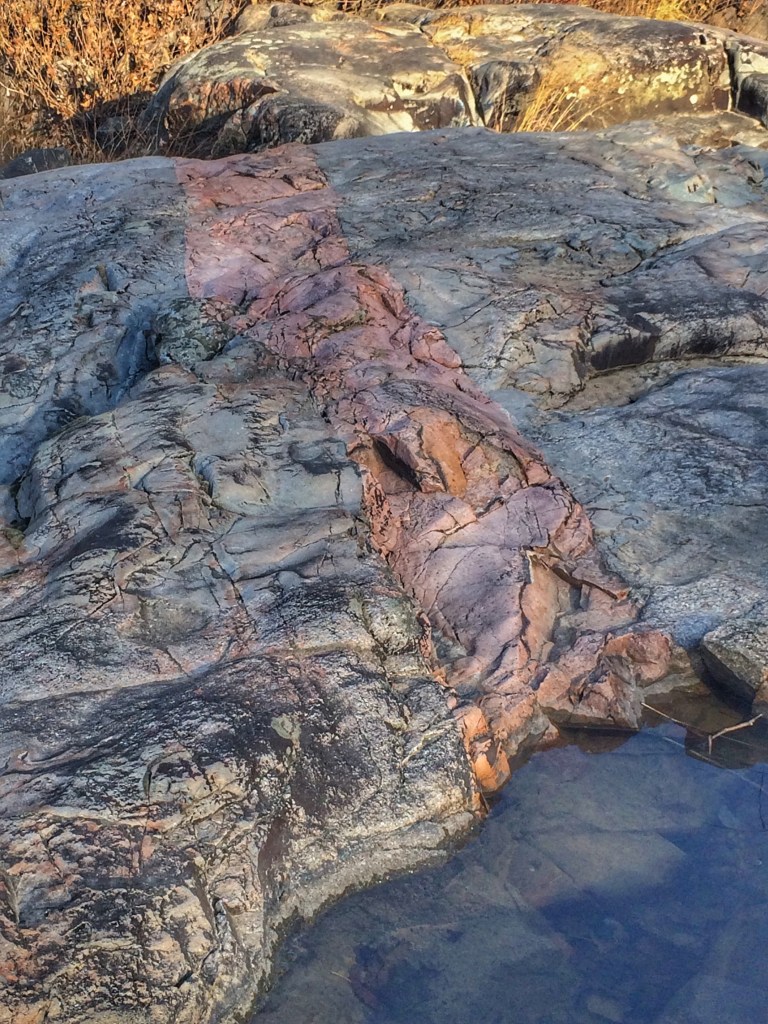
The geology of the area as mentioned is quite unusual, with one of the oldest outcroppings of pre-Cambrian rock in North America. Though part of the greater Ozarks area, St. Francois Mountains were formed by volcanic activity, as opposed to erosion of the uplifted plateau that created the rest of the hills and valleys in the Ozarks. The igneous rocks of the St. Francois Mountains are thought by geologists to be a series of caldera complexes (formed after large volcanic eruptions) that are similar in scale to the Yellowstone Caldera Complex. More photos, and much more about the geology of the mountains can be found here.
’

